
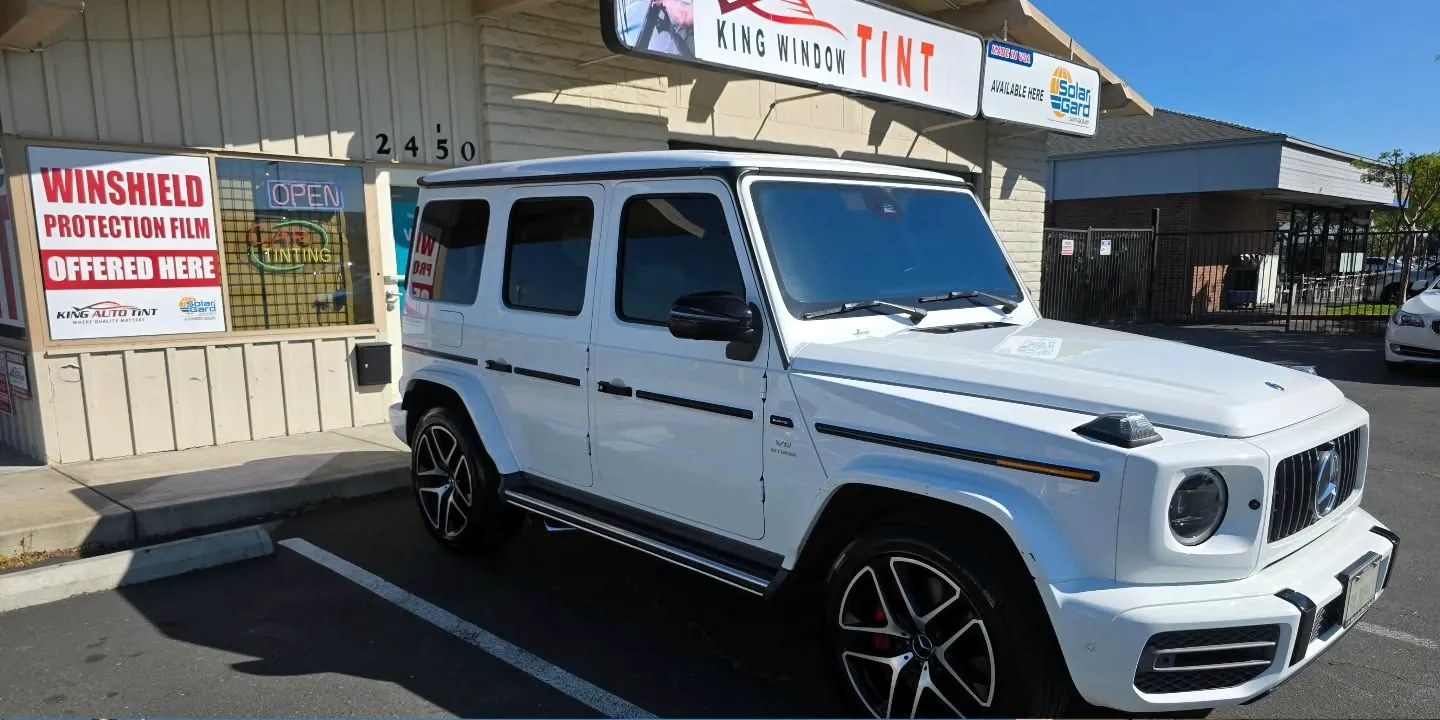
Why protect your windshield
Sacramento-area drivers spend a lot of time behind trucks and construction zones. Gravel kicked up on I-80 toward the Sierra, US-50 toward Placerville and Hwy 99's heavy truck traffic is one of the most common sources of windshield chips. Then the valley's big temperature swings, from cool mornings to 100°F afternoons, can turn a small chip into a crack.
Windshield protection film adds a clear, sacrificial layer to the outside of the glass. It takes the brunt of small debris, so the windshield itself stays in better shape for longer.
Why it matters more on newer vehicles
Many modern windshields aren't just glass. They hold forward-facing cameras for lane-keeping and automatic braking, rain and light sensors, acoustic layers and heads-up display features. That makes replacement more involved, and some vehicles need ADAS camera calibration afterward. Protecting a windshield like that is often an easy decision.
What it can and can't do
We want you to have realistic expectations:
- It can reduce the risk of chips and pitting from gravel and sand, and help keep the glass clearer over time.
- It can't make the windshield unbreakable. A large rock or heavy impact can still crack the glass.
- It's a wear layer. After years of absorbing debris, the film itself will show marks, and it can be replaced.
How to choose
Consider your driving. If you commute daily on the freeway, drive to Tahoe often, or follow trucks for work, you'll get the most value from film.
Consider your windshield's replacement cost. A windshield with cameras, a heads-up display or rain sensors costs more to replace. Most Sacramento shops quote roughly $250–$1,000 or more for windshield replacement, with ADAS, HUD and rain-sensor windshields at the higher end.
Start with undamaged glass. Film should go on a windshield without chips or cracks. If yours has damage, we'll recommend windshield repair first, or windshield replacement if the damage is too large.
Windshield film vs windshield tint
These are different products. Protection film is clear and goes on the outside to protect against impacts. Windshield tint is about heat and glare, and California only allows non-reflective tint on the top 4 inches of the windshield. Clear UV/IR films on the rest of the windshield are a gray area. Ask us and we'll explain what's compliant. See our California window tint laws guide for more.
Caring for windshield film
Treat the film much like the glass itself. Replace worn wiper blades, since a torn blade can scuff the surface. Use a soft cloth and a gentle glass cleaner, and avoid scraping ice or debris off with anything sharp. If the film starts to look hazy or scuffed after years of use, that's a sign it has been doing its job, and it can be replaced.
Complete the package
Many customers pair windshield protection film with ceramic window tint on the side and rear glass, and paint protection film on the front end. Together they protect the parts of the car that take the most abuse from the road.
Get a quote
Tell us your vehicle and we'll give you a clear price for windshield protection film. Request a quote, or call or text (916) 907-3234. Our shop is at 2450 Fulton Ave in Sacramento.